
A lot of job seekers are still running an old playbook called "Employment": polish the CV, apply, wait, repeat. It made sense for decades. It is not making sense now. The market that playbook was built for doesn't exist anymore, and no amount of polishing the same moves will win a game whose rules have already changed. Before we can strategise properly, we have to see the new game clearly.
Talk to enough designers job-hunting right now and a pattern emerges. Years of solid experience, a strong portfolio, genuine skill, and still nothing. Roles that do appear draw a thousand applicants overnight. Recruiters go quiet mid-process. Titles like "Design Lead" show up with salaries that don't match the responsibility. People start wondering if the problem is them: not experienced enough, not senior enough, not photogenic enough for an ATS.
It generally isn't them. It's the game.
The design job market isn't one story, it's two, and they're both true at once.
At the senior and generalist end, things are cautiously stabilising after the 2023-2024 downturn. Nielsen Norman Group's 2026 outlook describes an "AI fatigue" setting in, as organisations discover that replacing judgement with tooling has real hidden costs: maintenance, drift, legal exposure, operational complexity. Experienced people who can think strategically, not just produce artefacts, are finding their footing again.
At the entry and mid level, it's the opposite story. Supply still massively outstrips demand. Junior-level output (wireframes, mockups, the exact work that used to be how people broke in) is precisely what AI tooling now does fastest and cheapest. Layoffs continue well beyond the big tech names. Relocation support has largely disappeared, recruiters are overwhelmed, and for anyone job-hunting across a border, visa and residency friction adds another filter on top of an already brutal one.
So this isn't one market getting uniformly better or worse, it's a market splitting in two.
Design isn't unusual here, it's a visible symptom of something larger. Economists increasingly describe the AI-era economy as "K-shaped": one arm rising, one falling, from the same starting point. Oxford Economics has estimated AI has already added significant wealth gains for people who own appreciating assets or sit in high-leverage, judgement-heavy roles, while workers whose income comes from selling hours of a skill, including a lot of design work, have seen little of that benefit flow through to wages. Their own projection is that this divergence doesn't self-correct quickly, it's expected to persist well into the next decade.
That's the honest, uncomfortable headline: a widening gap between people whose work compounds and people whose work resets to zero every billable hour, and no strong evidence it closes on its own any time soon.
It's tempting to read a story like this as "the smart, hardworking ones make it and the rest don't." That's not quite it, and it matters that it's not quite it, because the wrong diagnosis leads to the wrong strategy.
The variable that sorts people isn't talent, it's leverage: whether your income depends on selling commoditised hours of a skill that's now partly automatable, applying into a queue with a thousand other equally capable applicants, or whether it comes from something you own outright, a product, a client base, a body of work, a position where your judgement compounds instead of resetting. A brilliant designer applying into that queue is playing the losing side of the split no matter how good the portfolio is. Someone shipping something of their own, however rough, imperfect or unglamorous, is at least playing a different game, one where effort and outcome are still connected.
That's not a guaranteed path either (building something is its own kind of lottery, and it's not a fair substitute for the stable job a lot of people need right now and can't get). But it's the structurally correct response to a market where the old employment game has stopped rewarding the old employment moves.
Worth saying plainly: no one has a confident, evidence-backed answer to where this lands. The optimistic case has real precedent: every previous wave of automation eventually produced categories of work nobody could have named beforehand, and the same could happen here. The pessimistic case is that this wave is structurally different, because it substitutes for judgement and creative cognition broadly rather than just routine tasks, so the usual "new jobs appear" pattern doesn't repeat on the same timeline. Anyone stating either version with total certainty is overselling it.
What the current data does support is narrower and more useful: the next few years will likely stay harder and more unequal than the years before them, entry-level and commoditised design work will keep facing the sharpest pressure, and the people navigating it best right now are the ones who've stopped waiting for the old game to come back and started strategising for the one that's in front of them.
Every week I send a design email covering exactly this, how to strategise your career and income in a design market that's changing fast.
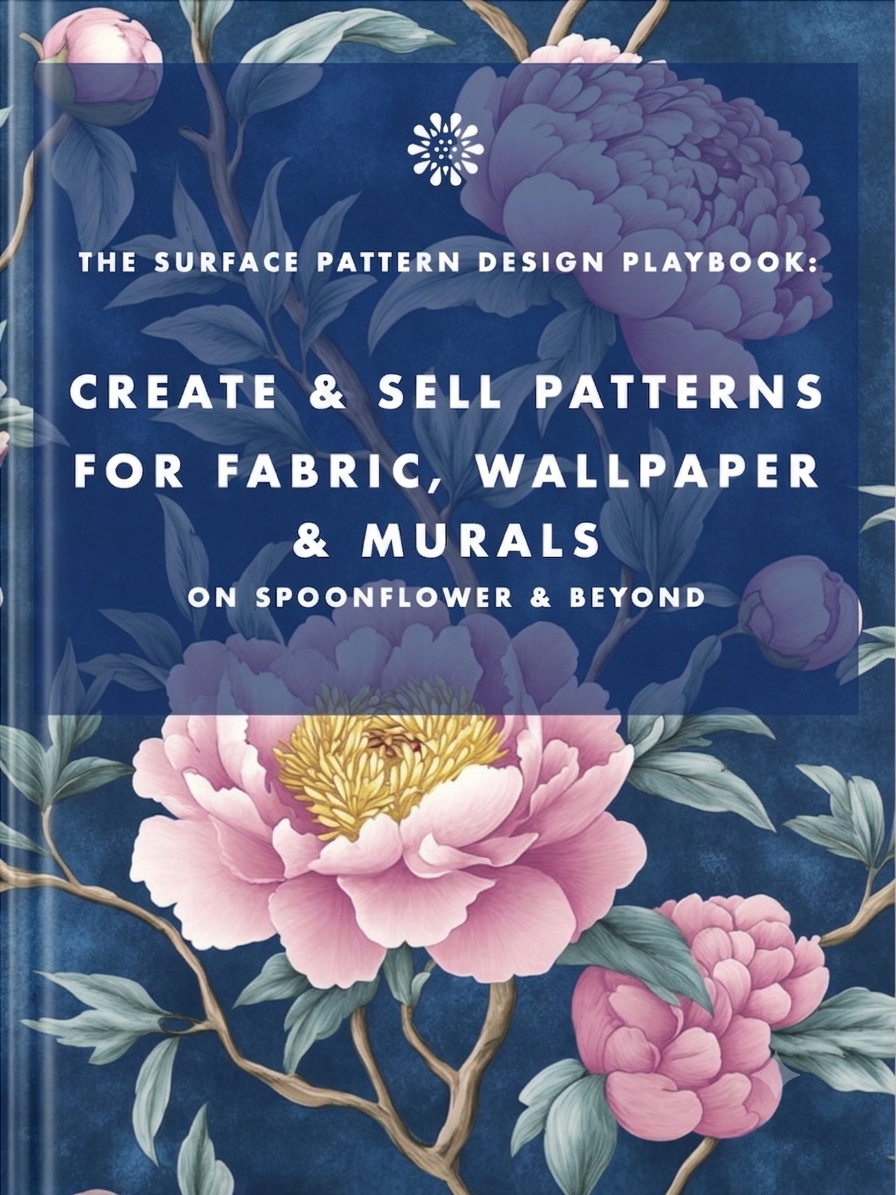
Earn from your design skills
Create & sell patterns for fabric, wallpaper & murals — on Spoonflower & beyond. Client-free, commute-free, creative work you can do from anywhere.
See the book →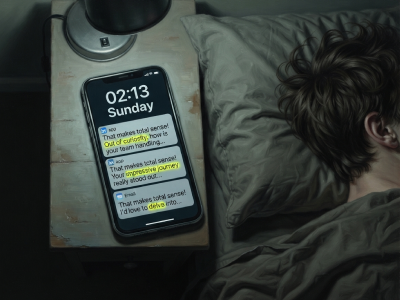
"That makes total sense! Out of curiosity…" are typical sentence snippets in your messages if you're talking to a bot.
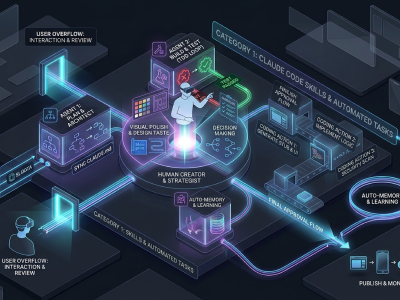
A real look at how I use Claude Code, Claude Cowork, Figma and more to design, build and market TickLists, my websites and my Spoonflower patterns, solo.

AI is replicating expertise faster than anyone expected. Here's the real research on what that means long-term — and the five human capabilities (EPOCH) that are becoming more valuable, not less, plus how to actually build and prove you have them.
Keep your design skills up to date with videos,
AI workflows, tutorials, ways to earn $$$ and free resources.
See past email newsletters.
Unsubscribe anytime.