
Let’s be honest up front: most people who upload designs to Spoonflower earn pocket money, not a salary — at least to begin with. A small, persistent minority build a meaningful side income, and a handful of top sellers earn a full-time living. The difference is almost never luck; it’s catalogue size, design quality and marketing. Here’s the realistic picture from someone who designs and sells patterns.
Spoonflower is a print-on-demand marketplace: you upload a design, set it live on fabric, wallpaper and home goods, and earn a commission each time someone buys a product made from it. You hold no stock and ship nothing.
The commission is a percentage of the item price (historically around 10%, with more possible through Spoonflower’s seller programmes — always check their current seller terms, as rates change). The key point: one good design can sell for years, across multiple product types, with no extra work from you.
Quantity matters more than people admit: a shop with 10 designs and a shop with 300 are not playing the same game.
Realistically, weeks to a few months — and it depends almost entirely on how discoverable your designs are. A handful of uploads with weak tags will sit unseen. Sales tend to follow a curve: slow at first, then compounding as your catalogue and reviews grow and your work starts ranking in Spoonflower’s search and appearing in curated collections. If you haven’t set up your shop yet, my step-by-step guide on how to sell your designs on Spoonflower walks you through what you can sell, how royalties work and how to prepare your files.
There are no guarantees, but a fair mental model: a small, well-tagged catalogue might earn a few pounds a month; a serious catalogue of a few hundred quality designs, marketed properly, can become a genuine side income; full-time earners treat it as a business with hundreds of designs and active promotion. It’s slow-burn, compounding income — not a quick win, and one of several realistic passive income streams for designers.
Is Spoonflower worth it for designers? Yes, if you already have the design skills and treat it as a long-term catalogue play. It’s poor as a quick-cash scheme.
Do I need to be an illustrator? No — geometric, photographic and AI-assisted patterns sell well too. You do need to nail seamless repeats and colour.
Can I sell the same design elsewhere? Usually yes (check each platform’s terms). Selling across platforms is the smart way to multiply income from one design.
How do I actually make a seamless repeat? That’s the core craft — and exactly what my Spoonflower book walks you through, step by step.
If you want the full workflow — from making seamless repeats to colour accuracy, file prep and pricing — my book How to Create Wallpaper, Mural & Fabric Designs for Spoonflower is the shortcut.
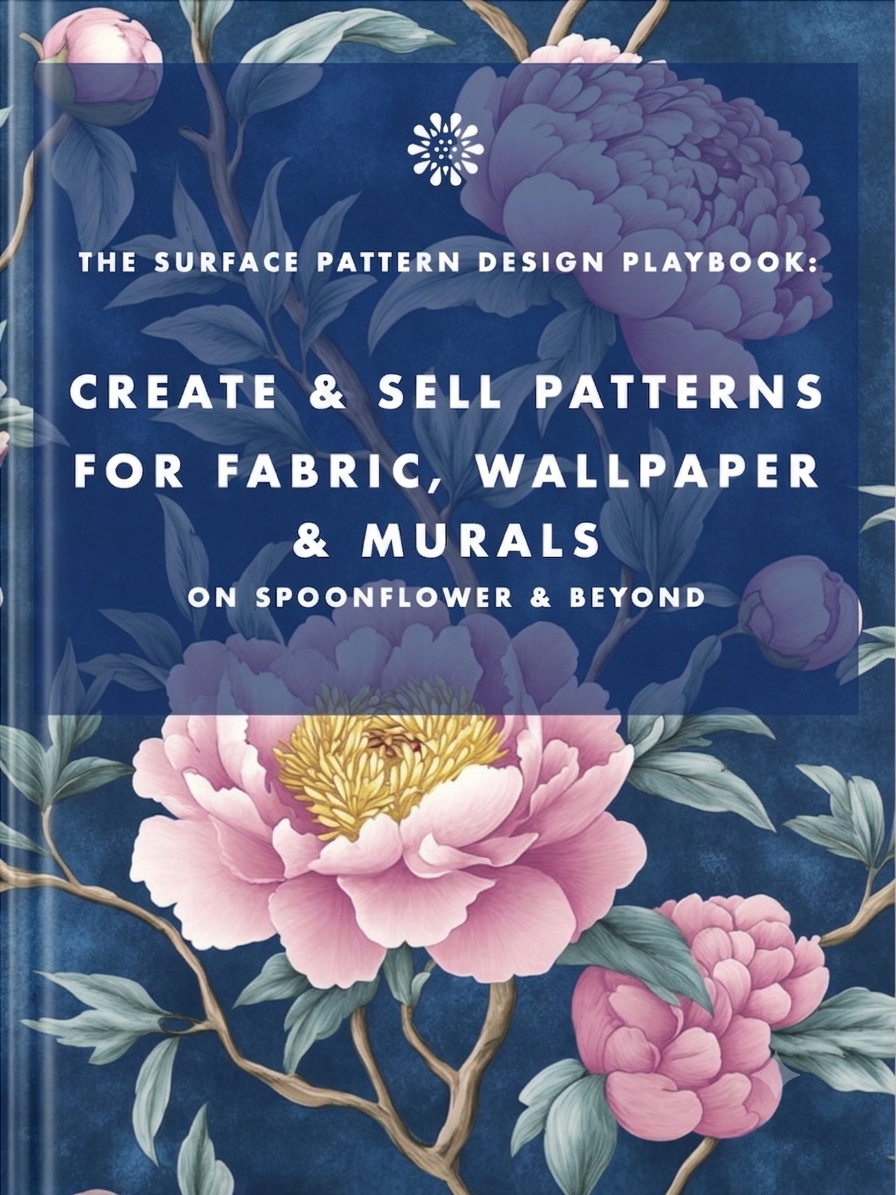
Earn from your design skills
Create & sell patterns for fabric, wallpaper & murals — on Spoonflower & beyond. Client-free, commute-free, creative work you can do from anywhere.
See the book →
"That makes total sense! Out of curiosity…" are typical sentence snippets in your messages if you're talking to a bot.

A real look at how I use Claude Code, Claude Cowork, Figma and more to design, build and market TickLists, my websites and my Spoonflower patterns, solo.

Job seekers who keep running the old employment playbook are playing a game whose rules have already changed. Here's what's happening in the design job market, and why leverage, not talent, is what separates who's finding traction.
Keep your design skills up to date with videos,
AI workflows, tutorials, ways to earn $$$ and free resources.
See past email newsletters.
Unsubscribe anytime.